
We need to have a very real, very uncomfortable conversation about the fairy tales being sold in the tech world right now. You see the headlines. You see the massive funding rounds. You see the explosive user growth. But what you don’t see is the bleeding balance sheet hiding just out of frame.
Case in point: Character.AI.
Just five years into its journey, this darling of the artificial intelligence boom—a platform that let users create and converse with custom AI avatars—has officially filed for Chapter 11 bankruptcy. They are sitting on assets and liabilities somewhere between $50 million and $100 million. They are selling off scraps to Disney for a mere $20 million. The platform is on life support, praying for a buyer before a complete wind-down in late November or early December.
How does a company with 20 million monthly active users, backed by $193 million in venture capital from heavyweights like a16z and Lightspeed, end up in bankruptcy court? How does a unicorn lose its horn and crash so spectacularly?
It happens when you confuse vanity metrics with a sustainable business model. It happens when you build a machine that costs more to run the more successful it gets. Let’s break down the anatomy of this collapse, because there are massive lessons here for anyone trying to build an operation today.
The Unicorn Illusion And The Trap Of Engagement
Let’s rewind to late 2021. Character.AI was founded by Noam Shazeer and Daniel De Freitas, two former Google engineers. And Shazeer wasn’t just any engineer; he was a co-author of the landmark Transformer paper—the literal blueprint for the modern AI revolution. They had the pedigree. They had the vision. They set out to train foundation models and build a platform where anyone could spin up a custom AI character and just start chatting.
The market ate it up.
By September 2022, they hit unicorn status—a $1 billion valuation backed by a $150 million fundraise. The numbers they were throwing around were staggering. In just five months, users had exchanged over 2 billion messages with their bots. By May 2023, their app saw 1.7 million installs in its first week. Fast forward to October of that year, and they were boasting 20 million monthly active users.
But here is the dirty little secret about consumer AI that nobody wanted to admit:
- Engagement is a double-edged sword: Users were averaging more than two hours a day on the platform. In the social media era, that’s a goldmine. In the AI era, it’s a financial death sentence.
- Compute costs are ruthless: Every single time a user sends a message, a server somewhere has to process that prompt through a massive neural network. That requires immense, expensive computational power.
- Free users burn cash: When you have millions of people chatting for hours a day for free, your server bills scale exponentially while your revenue stays flat.
They built one of the top apps in the world in terms of time spent. But they didn’t build a business. They built a bonfire, and they were using venture capital as the wood.
The Google Heist That Left The Cupboard Bare
When the bills start piling up and the path to profitability looks like a mirage, what do founders do? They look for an exit. But in today’s regulatory environment, massive tech monopolies can’t just buy up their competitors without triggering massive antitrust investigations.
So, they get creative.
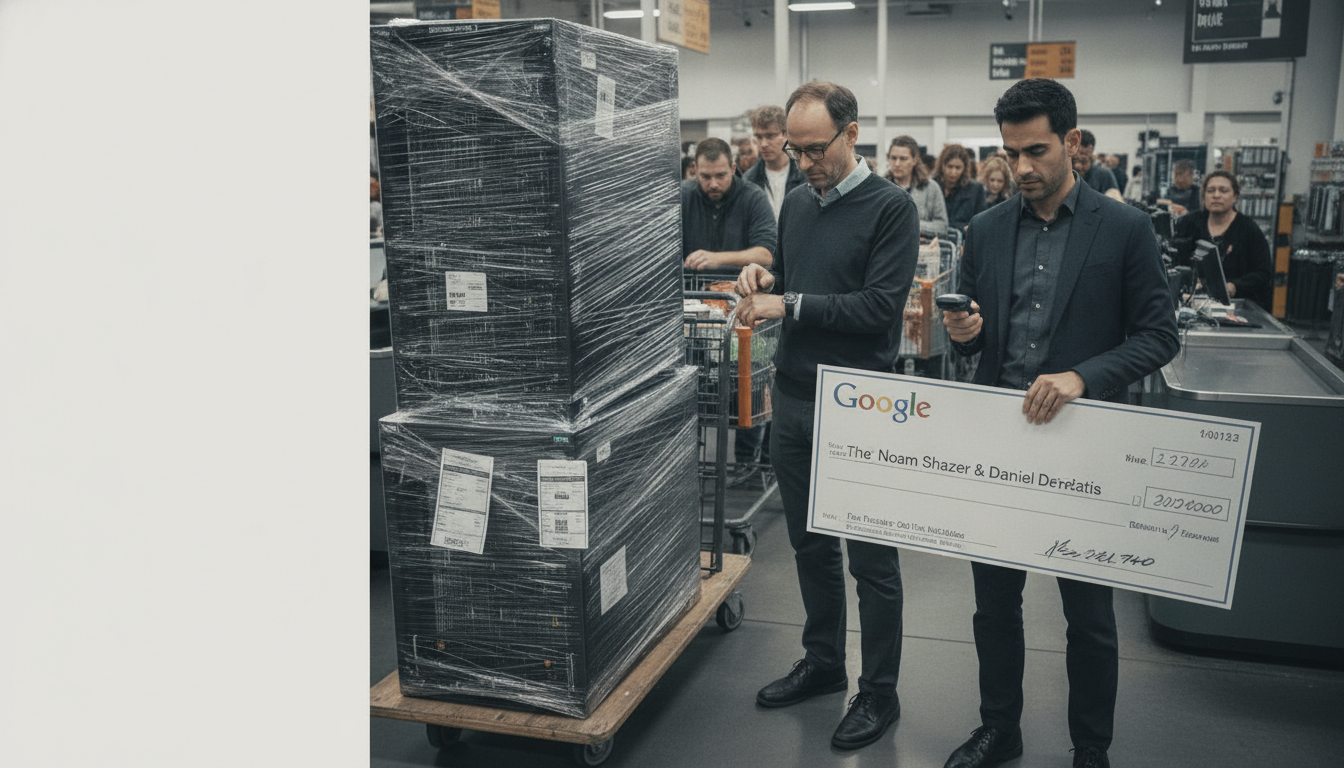
In August 2024, Google swooped in with a $2.7 billion deal. But they didn’t buy Character.AI. They simply licensed the startup’s models. And in the process, both Shazeer and De Freitas—the visionary founders—returned to the search giant.
Think about the mechanics of that move. The brains behind the operation took a massive payday and went back to their old desks. The startup was left behind with an interim CEO, a massive user base that didn’t pay the bills, and a pivot away from training foundation models to desperately focusing on “growth.”
It was a brilliant maneuver by Google. They got the talent and the tech without the liability of the company itself. But for Character.AI? It was the beginning of the end. You cannot gut a company of its founding visionaries, leave it with astronomical operational costs, and expect it to survive.
Tragic Consequences And The Regulatory Hammer
As if the financial mechanics weren’t brutal enough, the company was hit with a devastating reality check regarding the human cost of their technology.
The platform was sued following the heartbreaking suicide of a 14-year-old boy in Florida. His mother alleged that he had become dangerously obsessed with a chatbot on the platform. It is a profound tragedy, and it forces us to look in the mirror and ask hard questions about the psychological impact of highly engaging, autonomous conversational agents on vulnerable minds.
The fallout was swift and severe:
- Texas launched a formal investigation to assess whether the platform was violating child privacy and safety laws.
- The company was forced to settle lawsuits and scramble to implement aggressive safety features.
- They ultimately had to ban minors from the platform entirely.
When you are forced to fundamentally alter your user base and heavily restrict the core functionality of your product to mitigate legal and moral disasters, your growth metrics shatter. The wild west era of the platform was over. The regulatory hammer had fallen, and the cost of compliance added yet another massive weight to a ship that was already taking on water.
Disney Sweeps Up The Scraps For Pennies
By June of last year, the company brought in Karandeep Singh Anand, a former Meta executive, to try and right the ship. They tried everything to spur engagement that could actually be monetized—AI video generation, social feeds, interactive storytelling, microdramas. They threw everything at the wall.
Nothing stuck.
The fundamental flaw in the business model couldn’t be patched with new features. The changes couldn’t move the needle on sustainability. And so, the inevitable happened: Chapter 11.
Now, look at the carcass being picked over. Disney has stepped in, agreeing to buy some of the company’s assets and secure a non-exclusive perpetual license for its technology for a mere $20 million. Twenty million dollars. For a company that was valued at a billion dollars just a couple of years ago. It’s pennies on the dollar.
And the talent drain continued. Disney is receiving transition services via former Character.AI employees who joined the entertainment giant last month, alongside former CEO Anand. The current CEO, Colin Adams, is left holding the bag, navigating a court-supervised sale process.
Adams hopes the process will yield an actionable proposal to keep the platform alive. But he’s also brutally honest: there isn’t a bid yet. If a buyer doesn’t materialize by late November or early December, the platform will be wound down completely.
The Brutal Math Of Consumer AI
I want you to pay very close attention to this story, because it is the defining cautionary tale of our current technological era. We are obsessed with scale. We are obsessed with user acquisition. We are obsessed with the illusion of momentum.
But momentum without mechanics is just a fast ride to a brick wall.
Consumer-facing AI products are incredibly hard to scale and monetize. High engagement is not a victory if every minute of that engagement costs you hard dollars in compute power. You cannot build a sustainable operation if your primary product is a loss leader with no backend monetization strategy.
“High engagement without a monetization engine isn’t a business model. It’s a financial hemorrhage. If your systems don’t generate revenue, they are just expensive hobbies.”
This is why operational leverage is everything. You don’t need 20 million free users draining your resources. You need targeted, autonomous systems that actually drive revenue, reduce your overhead, and allow you to step away from the grind without the whole thing collapsing.
Character.AI built a fascinating piece of technology. They pushed the boundaries of what conversational agents could do. But they forgot to build a business. They forgot to protect their downside. They let the hype blind them to the brutal math of their own operations.
Don’t make the same mistake. Build systems that work for you, not systems that you have to constantly feed with cash just to keep the lights on. If you are ready to stop chasing vanity metrics and start building an autonomous operation that actually scales profitably, our system can help you design the architecture your business actually needs.