
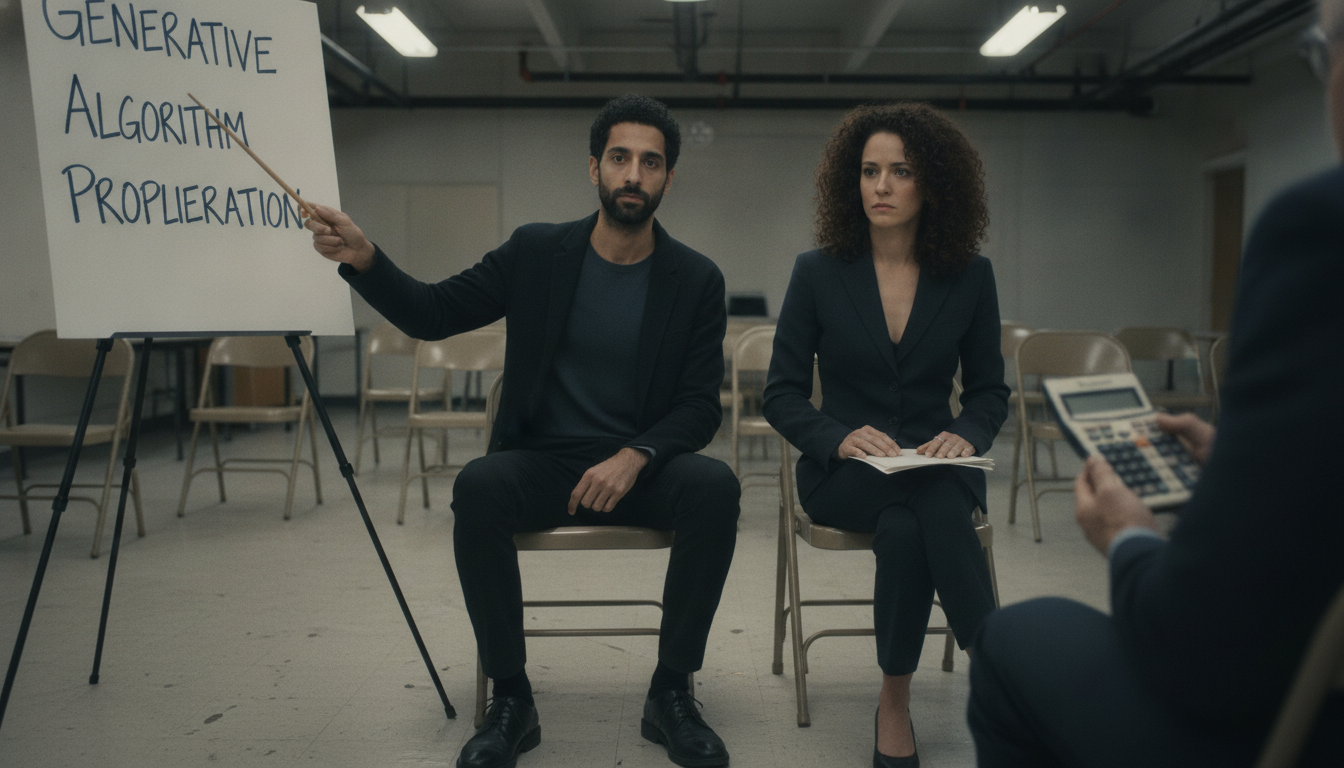
The narrative being shoved down your throat is that artificial intelligence is an unstoppable tidal wave. You are being told to brace for impact. Industry leaders want you to accept the loss of your dignity, watch your job security evaporate, and allow your children’s classrooms to become beta-testing grounds for Silicon Valley. That is a fabricated reality. You have the power to reject it. The conversation surrounding artificial intelligence has been hijacked by those who stand to profit the most from your quiet submission. They want you paralyzed by the sheer speed of innovation. They want you to believe that resistance is futile. Monday night at Webster Hall in Manhattan, a vastly different conversation took place. Mayor Zohran Mamdani and activist Ilana Glazer took the stage at The People’s AI Assembly. Hosted by the AI Now Institute, this event was not a celebration of autonomous systems or a pitch for the next great software update. It was a line drawn in the sand. Mamdani looked directly at the anxiety gripping New York City and told the public to stop accepting the premise that AI is coming for their minds and their livelihoods without their consent. He demanded that citizens take back control.
Local municipalities are waking up to a harsh truth. The federal government is doing virtually nothing to regulate the rapid deployment of artificial intelligence. Cities are being left to fend for themselves against some of the most well-funded corporations in human history. Public officials are finally realizing that they cannot wait for a national consensus that may never arrive. They must act immediately to protect their constituents from technologies that are being rolled out with zero oversight. Mamdani argued passionately that the rapid integration of these systems is not a foregone conclusion. Tech companies must be held accountable for the tools they release into the wild. You do not have to surrender your agency just because a billionaire in California tells you it is the future.
The Myth Of Inevitable Surrender
We are witnessing a coordinated psychological campaign to make you feel powerless. Tech executives use the language of inevitability to bypass the messy process of public consent. They drop powerful, untested tools into the market and tell you to adapt or die. This tactic is designed to overwhelm your critical thinking. Last month, Mamdani took decisive action against this exact strategy by ordering a ban on AI use in elementary and middle schools. He recognized that children are the most vulnerable targets of this unchecked expansion. Glazer, speaking from the perspective of a parent, articulated the exact unease that millions of families are currently experiencing. The sudden arrival of these tools in educational environments feels deeply unsettling.
Parents were never asked if they wanted their children interacting with generative algorithms during math class. The technology simply appeared. Glazer noted that this forced integration feels entirely non-consensual. Two years ago, these systems were not deemed necessary for a child’s education. Today, they are being treated as mandatory infrastructure. We must question why this shift happened overnight and who actually benefits from it. The answer is rarely the students. The beneficiaries are the corporations harvesting data and normalizing their products for the next generation of consumers.
Nothing has to be. There’s a creep that comes with this, and there’s an intent to overwhelm that leaves people feeling as if there is simply no option.
That statement from Mamdani strikes at the very core of the issue. The feeling of helplessness is a manufactured product. It is a feature of the rollout strategy, not a bug. By creating a sense of overwhelming momentum, tech companies discourage lawmakers from drafting meaningful legislation. They want you to think the train has already left the station. You are entirely capable of building a wall across the tracks. New York City is proving that local governments can push back against the tide. Challenging the assumption that schools and the public must simply accept whatever technology arrives is the first step toward reclaiming our sovereignty.
Reckless Adoption And The Real World Fallout
The consequences of blind trust in artificial intelligence extend far beyond the classroom. When we allow algorithms to operate without transparency, we invite deception into every facet of our daily lives. Over the summer, Mamdani introduced a policy targeting the real estate sector. The new rule requires landlords, brokers, and real estate platforms to clearly disclose when a property’s listing photos or videos are generated or altered using AI. The goal is to protect New Yorkers from getting “house-phished.” Misleading listings trick renters and buyers into wasting time and money on properties that do not actually exist in the physical world as they appear on a screen. This is a perfect example of how unchecked technology degrades basic trust in everyday transactions.
Fake apartment photos might seem like a minor inconvenience compared to global crises, yet they represent the exact same underlying disease. The disease is the reckless deployment of technology without regard for human impact. When we scale that recklessness up to the highest levels of government and military, the results become catastrophic. Mamdani did not mince words when addressing the darker side of this technological rush. He pointed directly to the devastating consequences of relying on algorithms for life-or-death decisions.
There has been a reckless adoption of technology without any kind of a reckoning with the limitations of that technology.
He cited the U.S. military’s February strike on a school in Iran. That attack killed more than 150 people. At least 123 of the victims were children. Officials involved in the Pentagon’s internal investigation later revealed to Bloomberg that an overreliance on AI in the targeting process was a contributing factor in the massacre. This is the ultimate cost of the “move fast and break things” philosophy. When you apply Silicon Valley startup culture to kinetic warfare, innocent people die. The desire to speak about artificial intelligence as if it is infallible is a dangerous delusion. Tech leaders present their systems as unquestionable oracles. They argue that the only people qualified to regulate the technology are the engineers currently building it. We heard these exact same arguments from Facebook back in 2008. We all know how that turned out. Trusting the architects of a crisis to engineer the solution is a recipe for disaster.
The Federal Vacuum And The Race To IPO
Why are local leaders like Mamdani forced to fight these battles on a municipal level? The answer lies in the complete abdication of federal law. Washington D.C. has effectively abandoned its duty to protect the American public from the risks associated with artificial intelligence. When the conversation does reach the national stage, it is immediately hijacked by geopolitical fearmongering. Lawmakers frame the entire issue as an arms race with China. Any humanistic concerns regarding job displacement, algorithmic bias, or the erosion of truth are aggressively pushed to the side. The language of national competition is used to silence anyone asking for basic safety guardrails.
President Donald Trump’s Superintelligence Task Force, announced earlier this month, perfectly illustrates this federal failure. The task force largely focuses on allowing powerful AI companies to self-regulate. Creating new federal restrictions is not on the agenda. This hands-off approach comes despite growing, desperate warnings from the very people building these systems. Whistleblowers at Anthropic, Google DeepMind, and OpenAI have publicly stated that unchecked AI could lead to human extinction. When the engineers inside the laboratory are sounding the alarm, politicians telling the public to relax is a profound dereliction of duty.
The true motivation behind this regulatory avoidance is entirely financial. These companies are not rushing to market because they want to save the world. They are rushing to market because they need to secure massive valuations. Anthropic is expected to debut on the public markets this year. OpenAI has explicitly stated it will go public in 2027. Every decision these organizations make is reverse-engineered from those IPO targets.
What it really is, is an attempt to escape any kind of accountability at any level, without also jeopardizing the potential valuation from an IPO.
This is the cold, hard truth of the artificial intelligence boom. The safety of your children, the integrity of your housing market, and the accuracy of military targeting systems are all secondary to the financial returns of venture capitalists. As we look toward the future and whatever comes after the current federal administration, a radically different framework is required. We must change how we think about these tools. We must change how we talk about them. The accountability we are willing to demand will determine the shape of our society for the next century. You cannot wait for a savior in Washington to draft the perfect bill. You must demand transparency in your local communities, in your schools, and in your businesses today. Stand up, look the machine in the eye, and refuse to be overwhelmed.