
The End Of The Chatbot Era And The Physical AI Reality
You are tired. I see it. You have been grinding for the last eighteen months, pitching your software to every venture capital firm on Sand Hill Road, and all you are hearing is crickets. It hurts. You feel like the market has turned its back on you. But let us cut the nonsense right now. I believe in your ability to build something great, I really do. But you have to get up off the floor, wipe the dust off your knees, and look at the actual board. The reason you are not getting funded is not because the market is bad. It is because you are building for 2023 in a 2026 world.
We are officially past the point where a cute text-generation wrapper is going to secure a Series A. The industry has moved on. The conversations happening right now among top-tier investors at Benchmark, Index Ventures, and General Catalyst are not about who can build a slightly faster chatbot. They are about what happens when artificial intelligence steps off the screen and into the physical environment. The screen was just the waiting room.
Hardware Is The New Software
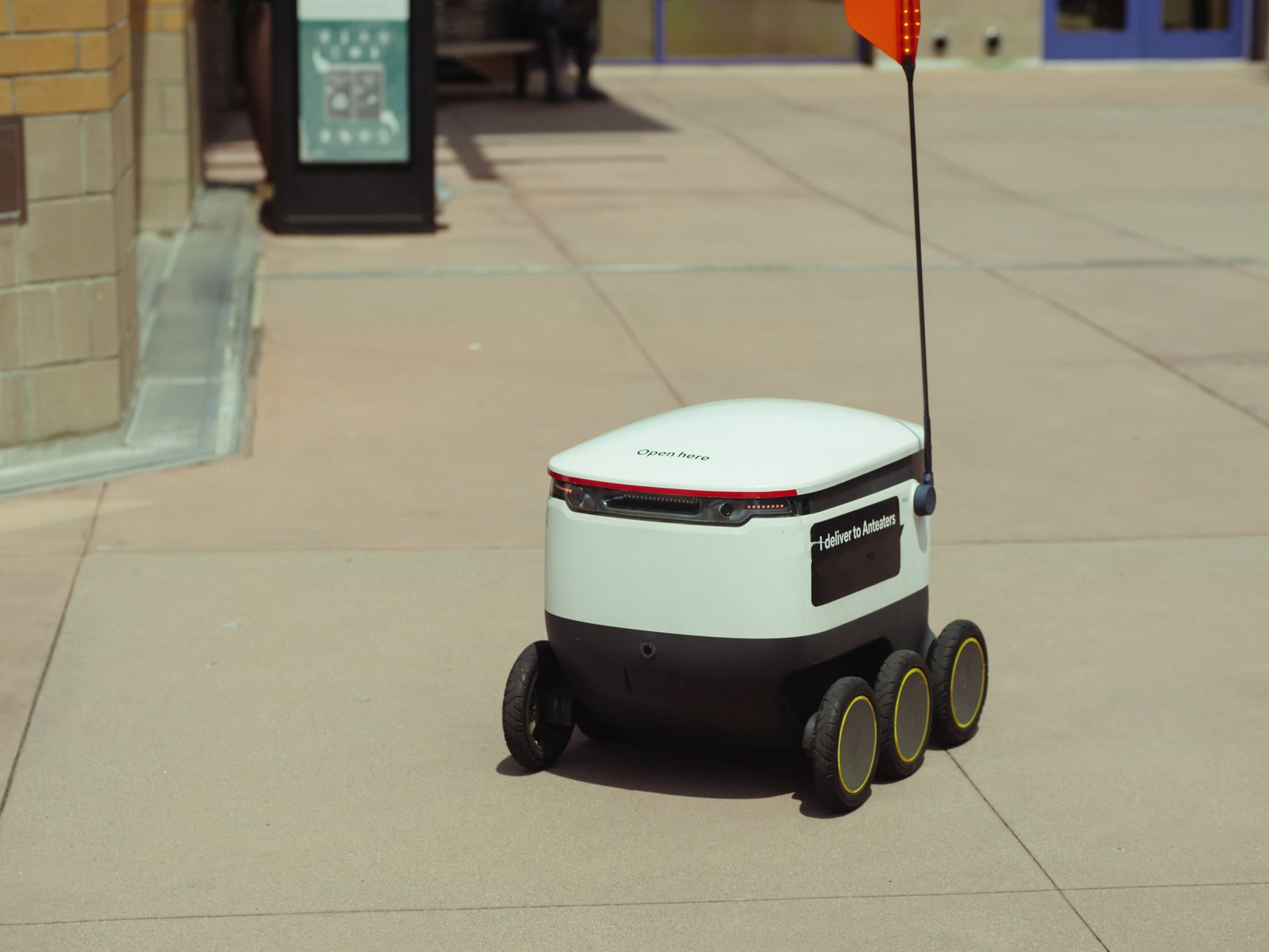
We are entering an era where AI is starting to design its own hardware. Let that sink in for a second. The models are optimizing the very silicon they run on. If you are a founder still thinking purely in terms of web applications, you are bringing a knife to a gunfight. The frontier is physical. We are watching the race to general-purpose robots unfold in real-time, and the smartest money in the room is betting on the intersection of AI and the physical world.
But here is the catch: physical AI cannot rely on a constant, perfect internet connection. What happens when the cloud goes down? If your autonomous system is operating heavy machinery, managing public safety infrastructure, or navigating a warehouse, it cannot just buffer. It has to operate at the edge.
The screen was just the waiting room. The real revolution happens when intelligence steps off the monitor and into the physical world, operating flawlessly even when the cloud goes dark.
The Edge Computing Mandate
Operating at the edge is no longer a luxury feature; it is a fundamental requirement for survival. When failure is not an option, your systems must be decentralized. We are seeing a massive push toward deploying AI in orbital infrastructure and deep-sea logistics. The founders who will win this decade are the ones figuring out how to compress massive intelligence into edge devices that function autonomously in dead zones. Stop whining about your cloud provider bills and start figuring out how to make your models run locally when the world goes offline.
The $63 Billion Storage Problem Nobody Wants To Face
Let us talk about the elephant in the server room. Everyone wants to build autonomous agents, but nobody wants to look at the infrastructure required to sustain them. We are staring down a $63 billion case for what the industry is calling ‘storagemaxxing.’ Your AI stack is hungry, and it is eating data at a rate that is breaking traditional financial models.
You want to build the next generation of AI giants? You have to understand infrastructure at the speed of demand. Power and freight without the wait. The physical constraints of data centers—literally getting enough electricity to the building to cool the servers—is the bottleneck of our generation.
The Rise Of Sovereign AI
And it is not just a corporate problem; it is a geopolitical one. We are watching the rise of Sovereign AI. Entire nations are asking a very simple, very dangerous question: Who will build the infrastructure and intelligence of the next AI economy? Countries are no longer willing to outsource their cognitive infrastructure to a handful of tech giants in California. They want their own data borders. They want their own models.
If you are building an enterprise solution, you have to account for this fragmentation. You cannot just assume a unified global cloud anymore. You have to build systems that respect data sovereignty, systems that can be deployed locally, securely, and independently. If your entire business model relies on funneling all global data into one centralized database, you are going to get regulated out of existence before you even hit Series B.
You cannot build a global empire on borrowed land. Sovereign AI means the future of infrastructure is localized, heavily fortified, and fiercely independent.
The Agent Security Nightmare
And while we are on the subject of infrastructure, we need to address the agent security problem that nobody is talking about. We are deploying autonomous agents to negotiate contracts, manage supply chains, and access secure databases. But who is watching the watchers? Proxy, host, operator—who can actually read your agent’s prompts?
When you give an AI system the keys to your enterprise, the cloud just got a lot more complicated. We are seeing massive vulnerabilities where agents can be manipulated through prompt injection or intercepted by third-party hosts. Securing the AI enterprise is not about setting up a firewall anymore; it is about securing the cognitive pathways of the agents themselves. If you cannot guarantee the absolute security of your agent’s decision-making process, your product is a liability, not an asset.
The SaaS Business Model Is Officially Broken
I am going to say something that might hurt your feelings, but you need to hear it. The traditional Software-as-a-Service business model is dead. AI just broke it permanently. For the last fifteen years, the playbook was simple: build a workflow tool, charge a monthly fee per user, and scale your seat count. That era is over.
Why? Because AI agents do not need seats. If you build an autonomous system that does the work of ten human operators, who are you charging? You cannot charge per seat when the software eliminates the seats. The entire economic foundation of SaaS is crumbling beneath our feet, and most founders are just standing there watching the cracks spread.
Enter The GTM Engineer
This shift is creating entirely new job categories. Enter the Go-To-Market (GTM) Engineer. This is the new power player in tech. We are no longer relying on massive sales teams cold-calling from a spreadsheet. The GTM Engineer uses AI to build hyper-personalized, automated acquisition systems. They are part developer, part marketer, and entirely ruthless.
They are executing the zero-to-1K playbook: getting the first 1,000 customers without a single dollar of traditional marketing budget. They are using models from OpenAI and Anthropic to scrape, analyze, and engage prospects with a level of precision that a human sales development rep could never match. If your startup does not have a GTM Engineer building autonomous acquisition loops, you are going to get outmaneuvered by a two-person team working out of a garage.
Value-Based Pricing Over Seat-Based Extortion
You have to rewrite your business model. You must transition from seat-based pricing to outcome-based pricing. You are no longer selling access to a tool; you are selling the completed work. The enterprise is not broken, your assumptions about it are. Corporate buyers do not want to buy more software. They want to buy results. If your AI can process ten thousand invoices a minute, charge for the invoices processed, not the login credentials.
The Venture Capital Reality Check
Let us bring this home to the money. I know you want that institutional check. I know you want the validation of a massive funding round. But you need to understand what limited partners and family offices are actually looking for right now. The entry fee to compete in foundational AI is approaching $100 billion. You are not going to compete there. So where do you play?
You play in the application of intelligence to hard, physical problems. You play in the un-sexy, highly lucrative world of enterprise operations. But you have to avoid the trap of overcapitalization. Raising too much money too early in an AI-first world is a death sentence. It makes you sloppy. It forces you to chase unnatural growth to justify an absurd valuation, right when you should be dialing in your unit economics.
Grow Like A Founder, Think Like A CFO
You have to balance growth with the P&L. You need to grow like a visionary founder but think like a ruthless CFO. The founders who are winning right now are doing more with less. They are using AI to keep their headcount incredibly lean. They are not hiring fifty engineers; they are hiring five engineers who know how to leverage autonomous coding agents to do the work of fifty.
Fundraising mistakes will kill your round before you even get to the second meeting. Do not walk into a VC’s office pitching a multi-model world strategy if you do not even have your first ten paying customers. They want to see traction. They want to see that you understand the new rules of going public, the shifting priorities of limited partners, and the reality of relationship-led go-to-market motions.
Redemption Through Execution
Look, the game has changed, but the fundamental rule of business remains the same: provide undeniable value. If you have been building the wrong thing, own it. Pivot. I believe in redemption. I believe in the power of a founder who realizes they made a mistake, takes the hit, and gets back to work. The physical world is waiting for intelligence. The enterprise is begging for autonomous systems that actually work. Stop building toys for the screen, and start building infrastructure for reality. Now get to work.