
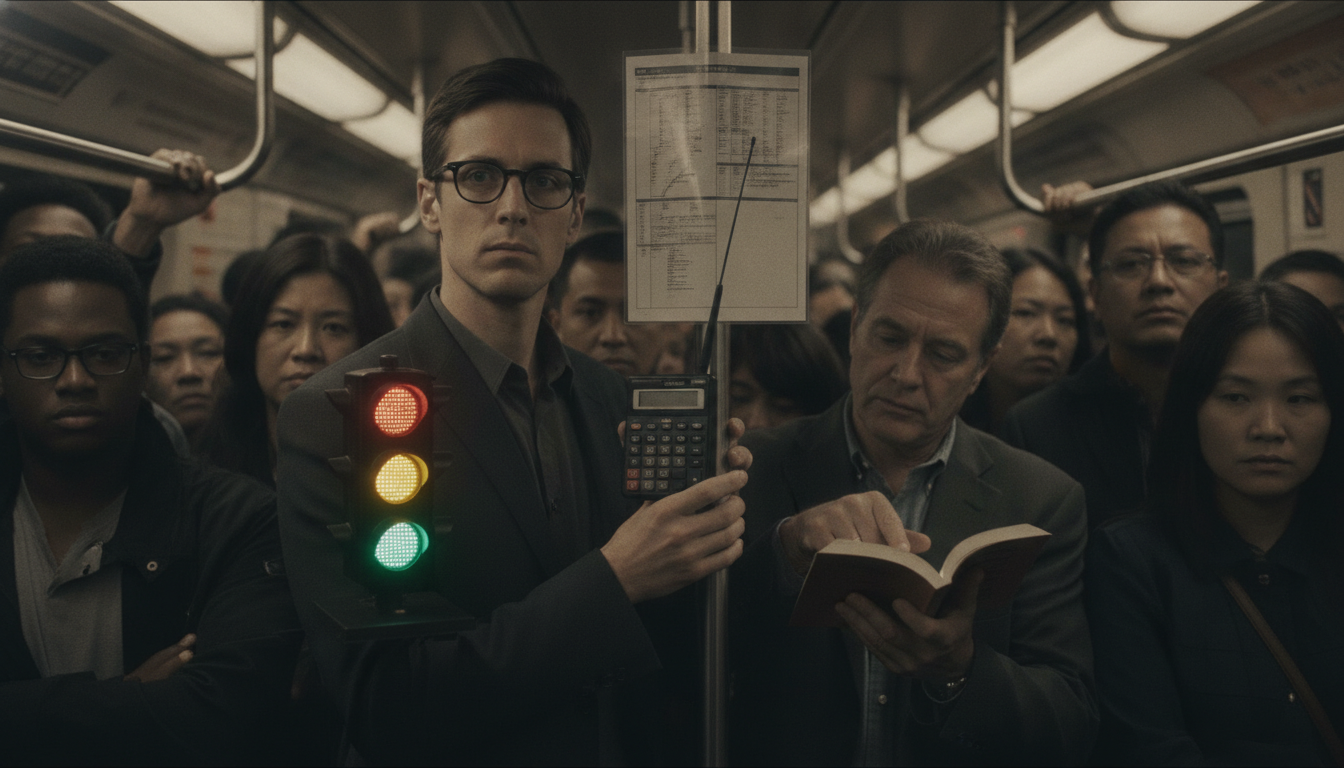
The Traffic Light Architecture of Modern EVs
Listen up. The automotive industry has been having a collective panic attack over software for the better part of a decade. You have spent a century perfecting the internal combustion engine, dialing in the suspension, and obsessing over panel gaps. And now? Now you are being told that the dashboard compute is infinitely more important than the drivetrain. I get it. It is terrifying to realize the game has completely changed beneath your feet. I know building a software division from scratch feels like trying to change a tire while driving on the highway. It is brutal. But you need to get up off the floor, dust yourself off, and look at what is actually happening in the market right now.
Rivian just fired a massive warning shot across the bow of every legacy automaker. They are not just putting a basic voice assistant in their cars to turn on the radio. They are actively transforming their electric vehicles into autonomous agent hubs capable of running third-party AI from frontier companies like Anthropic and OpenAI. This is not a gimmick. This is the new baseline for automotive operations.
If your current strategy is slapping a generic touchscreen on the center console and praying that a third-party phone integration does the heavy lifting, you are already obsolete. You don’t get to complain about the competition when you are refusing to do the work. Rivian has built its in-car software from the ground up. They bypassed the easy route. They created an in-house agentic framework that actually understands user intent and routes it to the correct system.
Edge vs. Cloud Routing
Let us break down the mechanics of what Rivian’s CEO RJ Scaringe is actually building. They have developed a routing system that operates like a digital traffic cop. When a driver speaks to the vehicle, the system instantly analyzes the complexity of the request and decides which AI model is best suited for the job.
“Think of it as like a traffic light. So if you ask the vehicle something, it decides what model it’s going to use. It can use a local model that’s running on the edge and the vehicle. If it’s a more complex question, it can go up to the cloud. And then even for that, we have different models that we use.”
This is operational leverage in its purest form. For simple, immediate tasks—turning down the cabin temperature, activating the seat warmers, or rolling down a window—the vehicle relies on a local model running on the edge. It is fast. It is reliable. It does not require a cell signal. But when the driver asks for a complex summary of the morning news or a deep-dive into a specific topic, the system routes that request up to the cloud to leverage heavier, more capable models.
You need to understand the gravity of this architecture. They are not locking themselves into a single vendor. They are building a dynamic infrastructure that can hot-swap models based on the specific needs of the moment. That is how you build a resilient software ecosystem. Boom. Done.
Why Walled Gardens Are Dead in the Water
For years, the automotive industry has treated its software like a walled garden. You wanted total control over the user experience, but you lacked the internal talent to actually make that experience good. So, you ended up with clunky, unresponsive infotainment systems that drivers actively hated. Then, you surrendered the dashboard entirely to tech giants, letting drivers mirror their phones just to get a decent navigation map.
Rivian is proving that there is a third way. You can own the core operating system while still opening the doors to the best intelligence in the world. By planning to integrate agents from Anthropic, OpenAI, and Meta, they are acknowledging a fundamental truth: no single car company is going to out-innovate the dedicated AI labs when it comes to raw intelligence.
The Apple CarPlay Crutch
Stop outsourcing your brain. When you rely entirely on external phone-mirroring software, you lose all context about the vehicle itself. The phone does not know the battery state of charge. It does not know the tire pressure. It does not know the exact temperature of the rear left seat. It is a generic interface slapped over your hardware.
Rivian built its own applications, including its own navigation, so that the AI agents have deep, native access to the vehicle’s actual state. When a driver interacts with the native assistant, it is a holistic experience. The integration of third-party agents into this native environment is where the magic happens. You get the world-class reasoning capabilities of a model like Claude, combined with the deep, hardware-level context of the Rivian operating system.
This requires immense coordination. It requires building the right APIs. It requires sitting down with the AI labs and doing the unglamorous, heavy-lifting plumbing to make these systems talk to each other seamlessly. It is hard work. But as I always say, the work is the work. You either do it, or you lose.
The Hard Boundary Between Intelligence and Mechanics
Now, let us talk about the elephant in the room: safety. We are talking about two-ton pieces of metal hurtling down the highway at seventy miles per hour. You cannot just plug an experimental language model into the CAN bus and hope for the best. The stakes are life and death. I believe in the power of AI to revolutionize operations, but I also believe in hard, non-negotiable boundaries.
When you are integrating agentic software near safety-critical systems, you have to be paranoid. You have to build firewalls that cannot be breached by a hallucinating AI or a misunderstood voice prompt.
Plumbing the Safety Protocols
Rivian understands this implicitly. The agentic framework they are building is strictly partitioned away from the vehicle’s core mechanical controls. The AI can adjust the ambient lighting, it can queue up a playlist, and it can summarize your calendar. It cannot, under any circumstances, take control of the physics of the car.
“You wouldn’t want an agent to determine, ‘hey, it’s time to apply the brakes, or time to steer the vehicle.’ So anything that’s vehicle-level controls are not being handed to an agent.”
This is the exact kind of operational discipline your manufacturing divisions need to adopt. You must map out every single touchpoint in your software architecture and clearly define what is a ‘convenience’ system and what is a ‘critical’ system. The AI gets the convenience layer. The critical layer remains locked down, governed by deterministic code that does exactly what it is supposed to do, every single time, without fail.
Do not let the hype blind you to the engineering reality. The plumbing required to make this safe is extensive. It requires rigorous testing, constant monitoring, and a culture that refuses to cut corners. If you rush this, you will fail. But if you architect it correctly, you create an unparalleled user experience that feels like magic.
Context Continuity is the New Horsepower
We are moving past the era where a car’s value was defined solely by its zero-to-sixty time or its towing capacity. Do not get me wrong, performance matters. But in the electric vehicle space, performance is becoming commoditized. Everyone is fast. Everyone is quiet. The new battleground is context.
The future of the automotive experience is about seamless continuity between the driver’s life outside the car and their life inside the car. Rivian is looking at a future where the vehicle is just another node in a continuous stream of intelligence.
The Cross-Device Handoff
Imagine the operational flow. A driver is sitting in their kitchen on a Thursday night, talking to an AI assistant on their phone about hosting a dinner party. They brainstorm a menu, discuss dietary restrictions, and build a grocery list. The next morning, they get into their vehicle.
They ask the car to turn on the ventilated seats. Then, without missing a beat, they say, ‘We were talking yesterday about this meal. I am planning to have guests over on Friday. Can you help me think through what we are going to make?’
Because the vehicle is integrated with the same underlying frontier models, it pulls the context from the previous night’s conversation. It knows the menu. It knows the grocery list. It can immediately route the navigation to the nearest high-end grocery store that carries the specific ingredients needed. The car is no longer just a mode of transportation; it is an active participant in the driver’s daily operations.
Tesla has already started moving in this direction by adding Grok to its ecosystem. The race is officially on. The automakers who figure out how to securely, seamlessly, and intelligently integrate these third-party agents into their native software stacks will own the next decade. The ones who refuse to adapt, who cling to their legacy systems and complain about the difficulty of the transition, will be left behind. It is entirely up to you which side of history your operations will land on.