
The Dirty Secret of the One-Gallon Can
Let me paint a picture for you. You are driving all over New Smyrna Beach, Daytona Beach, Ormond Beach, and Holly Hill. You are hustling. You are servicing accounts, rolling up to houses, and matching the ticket volume of guys who have been in the game for forty years. You finish your route by noon, head home, and think you have beat the system. But here is the brutal reality: you are getting paid five dollars an hour. Below minimum wage. Unlicensed. Off the books. Two hundred bucks a week for forty hours of your life, plus some free meals.
It sounds like a rip-off. And it is.
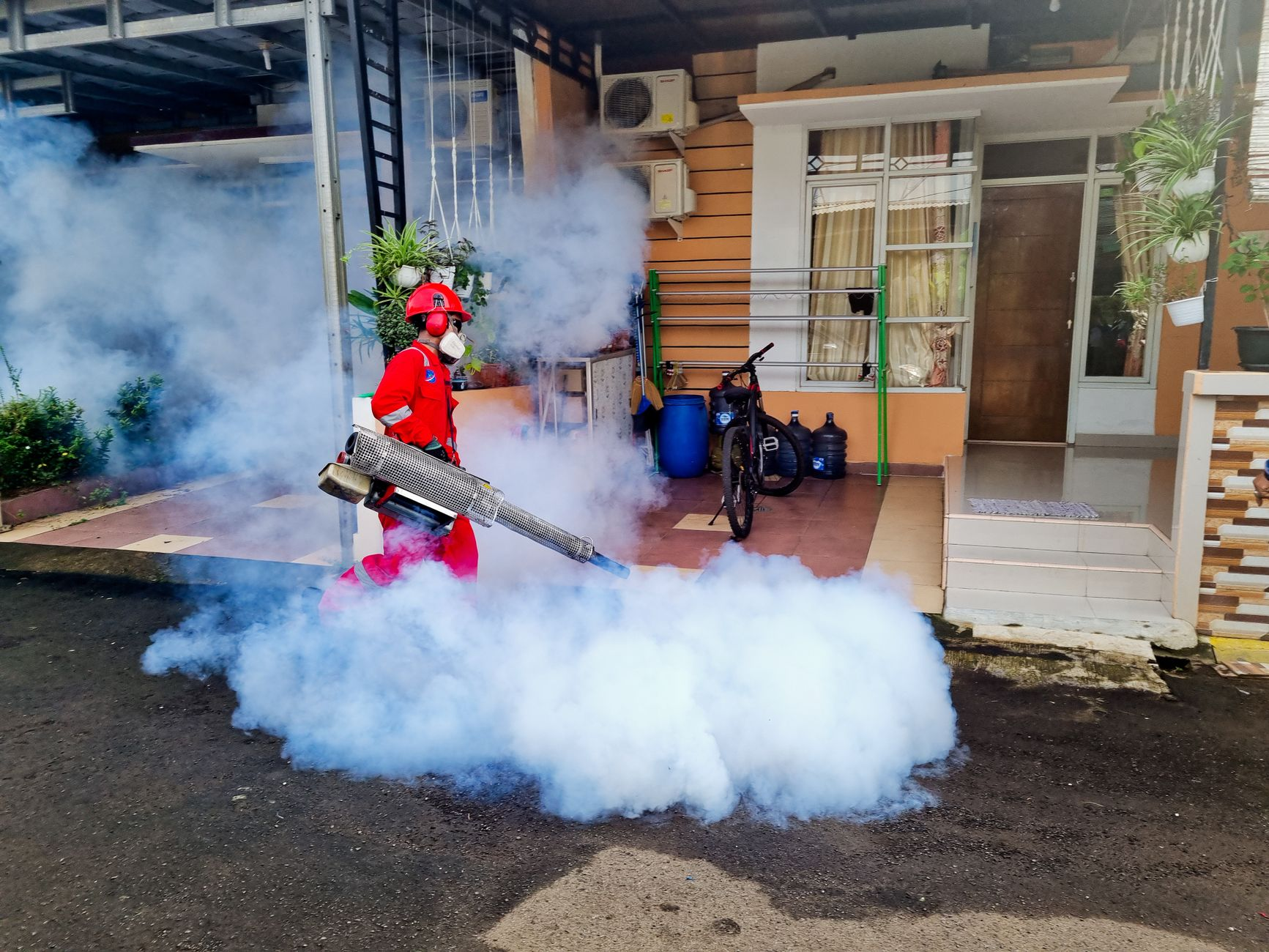
But the real education isn’t in the paycheck; it is in the process. Look at the actual mechanics of a standard pest control route in a place like Florida, where there are more bugs than anywhere else on the planet. The entire job consists of carrying a metal can with a manual pump and a small container of powder. You roll up to a customer’s house. You walk over to their garden hose. You fill the can with water, drop in one single scoop of powder, shake it up, and manually pump the handle. Then, you hold the trigger and walk the perimeter of a 2,000-square-foot house exactly one time.
That is it. That is the whole job.
You might think a professional pest control technician has a massive toolbox of specialized chemicals. You might assume that if a customer has banana spiders, there is a specific, highly technical recipe required to handle it. Nope. One ingredient. One can of water. Walk the perimeter. When you realize how simple the fulfillment actually is, a dangerous thought starts creeping into your head. You start wondering if the whole industry is just a house of cards.
“Pest control is a scam. This thing that we’re spraying, you can buy at Home Depot. Anyone can buy it at Home Depot.”
I hear this all the time. People get triggered. They scream about insurance, licensing, and liability. But the truth is, you can go buy a bottle of Spectracide for $9.97, spray your house once a year, and you will probably be fine. So, is your home service business a scam?
Absolutely not. Get up off the floor and stop apologizing for your pricing.
You are not selling a ten-dollar bag of powder. You are selling a convenience business. You are selling peace of mind. When a homeowner hires you, they are buying a third-party expert so they don’t have to think about the bugs, the chemicals, or the hassle. They could make their own burgers at home, but they still go to McDonald’s. They could filter their own water, but they still buy expensive filtration systems. Your business exists because people will happily pay a premium to reclaim their time and outsource their minor anxieties.
The Vitamin vs. Painkiller Framework in Home Services
Once you understand that you are selling convenience, the entire landscape of your operations shifts. You stop competing on the cost of materials and start competing on the frictionless delivery of a result. This is the difference between selling a painkiller and selling a vitamin.
A painkiller is when there is a raccoon in the attic or a snake in the kitchen. The customer is in acute pain. They need it solved immediately, and you can charge an arm and a leg for that emergency extraction because nobody wants to deal with a snake. But the vitamin? The vitamin is the quarterly maintenance spray. It is the nice-to-have, recurring revenue model that keeps the lights on and builds the valuation of your company.
The Eight-Figure Christmas Light Cash Cow
If you want to see the ultimate expression of the convenience business, look at seasonal holiday lighting. I recently analyzed an operation started by a relentless hustler who understood this framework perfectly. She launched her Christmas lighting business in August. By November 30th of her first year, she had $150,000 in the bank.
She ran that business for thirteen years and scaled it to eight figures. Even at massive scale, she was pulling down 30% to 40% net margins. How? She didn’t waste time trying to convince frugal people to part with their money. She targeted the exact demographic where the demand for convenience was the strongest.
She drove her van into the wealthiest neighborhoods in San Francisco and simply parked it there. Free advertising. She put flyers on every single door. She understood neighborhood psychology: when Mary Jane down the street gets her lights professionally installed, her neighbor Mark suddenly feels the pressure to keep up. The retention rate for this business was a staggering 85%. It grew every single year because it was a high-margin, nice-to-have service delivered flawlessly to people who valued their time more than their money.
The Permanent Upsell: Flipping the Script on Seasonal Revenue
Now, let’s elevate your thinking. If you are running a seasonal convenience business, you are leaving massive operational leverage on the table. You are trapped in a cycle of installing and tearing down. But what if you could convert a seasonal rental into a permanent, high-ticket asset?
Enter the permanent lighting model.
There are massive franchise brands out there selling permanent, year-round LED lighting systems. These aren’t just Christmas lights; they are architectural LEDs controlled via a smartphone app. You can make them green for St. Patrick’s Day, red for Valentine’s Day, or warm white for a random Tuesday. Customers are paying anywhere from $1,500 to $3,000 for these installations. They justify the cost because it adds value to the home and eliminates the $400 annual fee they were paying the seasonal light guys. After five years, the homeowner breaks even.
The Alibaba Arbitrage Strategy
Here is how you actually execute this and take over your market. You do not need to buy into an expensive franchise to offer this service. The equivalent permanent LED lighting technology is readily available through global suppliers like Alibaba for a fraction of the cost—often just a couple of bucks per foot.
When November hits, you don’t just blindly knock on doors. You fish where the fish are. You target the houses that already have traditional Christmas lights installed. You walk up, knock on the door, and make an irresistible offer.
“Hey, those are beautiful Christmas lights. How about I take them down for you for free at the end of the season? I’ll pack them up for your attic. In exchange, I want to install a permanent, app-controlled LED system for you. You leave them up year-round, change the colors from your phone, and you will never have to pay someone $500 every winter to climb a ladder again.”
This is a masterclass in sales acquisition. You are targeting proven buyers. You know they value exterior aesthetics. You know they have the disposable income. You are solving an immediate pain point (taking down the old lights) while upselling them into a high-ticket, high-margin permanent solution.
Step-by-Step: Automating Your Home Service Empire
You know the mechanics. You know the psychology. But if you are still the one driving the truck, pumping the manual sprayer, or climbing the ladder, you do not own a business. You own a job. And frankly, you are better than that. It is time to build an autonomous machine.
Here is the exact framework to transition your home service operation from manual hustle to automated empire.
Step 1: Standardize the Delivery
You cannot automate chaos. If every job requires a custom solution, you will never scale. Look back at the pest control example: one scoop of powder, one gallon of water, one lap around the house. That simplicity is a feature, not a bug. You must strip your service delivery down to its absolute most basic components. Create rigid Standard Operating Procedures (SOPs). Your technicians should not have to think; they should only have to execute. When the fulfillment is standardized, training takes days instead of months, and quality control becomes a simple checklist.
Step 2: Deploy Autonomous Systems for Routing and Sales
Stop manually responding to every customer inquiry and trying to figure out the most efficient route on a physical map. We are living in an era of unprecedented technological leverage. You need to implement automated systems that handle the heavy lifting of your administrative work.
- Automated Lead Nurture: When a homeowner requests a quote, an AI tool should instantly reply, qualify the lead, and book the inspection directly onto your calendar without you ever touching your phone.
- Dynamic Routing: Use automated platforms to cluster your jobs geographically. If a technician is spraying a house in a specific zip code, the system should automatically schedule nearby maintenance sprays for the same day. Density equals profitability.
- Review Generation: The moment a job is marked complete, your system must automatically text the homeowner a link to leave a five-star review. This builds your digital authority while you sleep.
Step 3: Own the Neighborhood Density
The Christmas light entrepreneur didn’t scatter her efforts across the entire state. She parked her van in one wealthy neighborhood and dominated it. You must do the same. When you secure one client in a high-income subdivision, your automated marketing systems should immediately trigger hyper-local campaigns targeting the surrounding fifty homes. Send direct mail, drop ringless voicemails, and run geo-fenced digital ads that say, “We are servicing your neighbor’s house tomorrow; want us to stop by?”
You are not just selling bug spray or light bulbs. You are selling the luxury of time. You are selling the convenience of a problem handled before the homeowner even realized it was a problem. When you standardize the product, automate the communication, and dominate the local density, you stop sweating in the Florida heat for five dollars an hour. You step back, look at the board, and watch the machine run itself.
If you are tired of being the bottleneck in your own operation and want to see how our automated systems can build this exact autonomous infrastructure for your business, let’s have a conversation.