Look around you. Every screen, every cloud server, every artificial intelligence model hallucinating in a data center—they all bow to one master. And it is not the company whose shiny logo is stamped on the back of your phone.
Most people have never bought a single product directly from them. They do not sell subscriptions. They do not run glossy ad campaigns. They do not care about your consumer brand loyalty.
They just run the world.
“You want to know what real power looks like? It isn’t a flashy logo or a viral marketing campaign. Real power is building the invisible, terrifyingly complex foundation that every single one of your competitors relies on to exist, and making it so flawlessly that they have no choice but to hand you their blueprints and their cash.”
Welcome to the brutal, beautiful reality of TSMC.
The Invisible Empire
In one quarter of 2026, this company pulled in over forty billion US dollars in revenue.
Read that again. Forty. Billion. Dollars. In a single quarter.
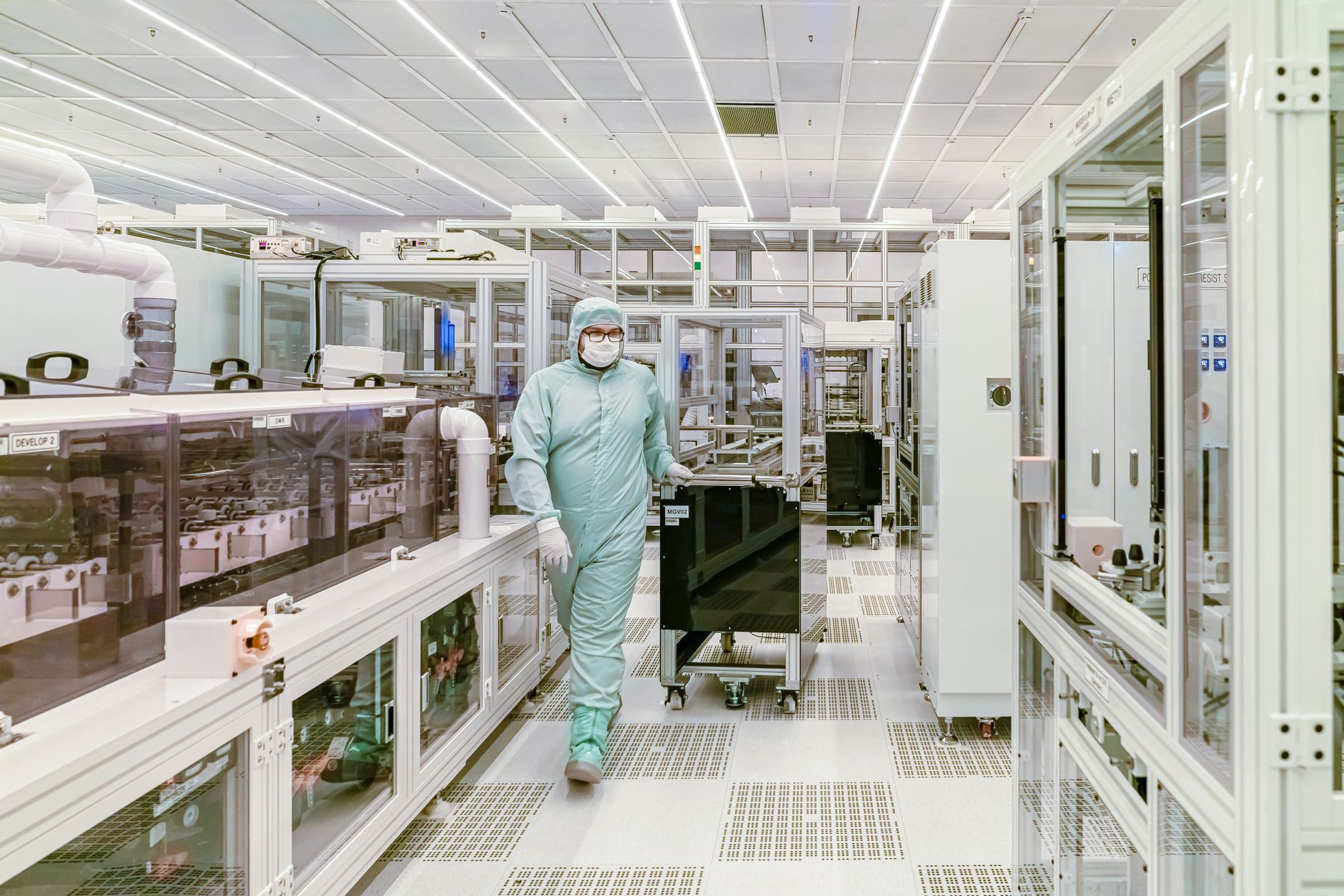
And they did it while maintaining a gross margin near sixty-eight percent. Operating margins hit sixty-point-three percent. Net margins sat at fifty-five-point-six percent. Those are numbers that make premium software companies weep with envy. But TSMC isn’t selling software. They aren’t pushing pixels or selling digital air. They are operating giant, hyper-complex factories packed with chemicals, clean rooms, water systems, and power infrastructure.
How does a factory operator pull software margins?
By mastering the art of neutrality.
TSMC’s greatest breakthrough wasn’t just technological; it was organizational. They looked at the landscape and made a choice: We will not compete with our customers. They built chips for other companies instead of launching their own finished products.
That neutrality birthed ultimate trust.
A designer could focus entirely on architecture. They could dream up the most insane, boundary-pushing chips, and hand the terrifying complexity of actual fabrication over to TSMC. Customers handed over their most valuable, closely-guarded designs because they knew TSMC wasn’t going to turn around and build a rival smartphone or a competing AI assistant.
They turned specialization into scale. Then they weaponized that scale.
The Brutal Math of Yields
Let’s get one thing straight. You can’t just buy your way into this game.
The Illusion of the Machine
A new competitor could theoretically raise billions, build a factory, and buy the exact same lithography machines. But they would fail. Miserably.
Why? Because of yield.
A chip design only becomes a viable business when enough working chips actually survive the manufacturing process and emerge from the wafer. That survival rate is the yield. And yield isn’t something you can unbox. Yield is the compounding result of years of blood, sweat, and process knowledge.
It is the recipe. It is the defect data. It is the supplier coordination and the ruthless, unforgiving operating discipline that TSMC has bled for over decades.
You want to play at the leading edge? You have to earn it in the dirt.
Advanced processes at seven nanometers and below produced seventy-seven percent of TSMC’s wafer revenue. In Q2, three nanometers represented thirty percent of revenue. Five nanometers took thirty-three percent. Seven nanometers took eleven percent.
Not all wafers are created equal. Older nodes are still out there running your car and your microwave, but the leading-edge nodes command the market because they pack more transistors into less space. They deliver better performance and lower energy use.
The newest node isn’t just a smaller number. It is the gateway to the next generation of human technology.
The Two-Nanometer Bleed
Growth hurts. If you aren’t bleeding a little bit, you aren’t moving forward.
TSMC knows this better than anyone. By Q2 2026, their two-nanometer process had already appeared at three percent of revenue during its early ramp.
But early ramps are brutally expensive.
TSMC expected the two-nanometer ramp to drag their gross margin down by three to four percentage points in the third quarter. They willingly took a hit to their profitability. They ate the pain.
Why? Because that temporary pain is the moat.
Listen to me. You have to be willing to sacrifice a comfortable present for a dominant future. Standing still would protect their cash for a minute—and it would completely destroy their empire.
Learning faster allows TSMC to move their customers into volume production sooner. It allows them to spread their massive fixed costs over more wafers. It funds the next node before the competition even figures out the current one.
They are constantly replacing a highly profitable present with a massively expensive future.
That takes guts. It takes a fundamental belief in your own ability to execute. When you are operating at the frontier of physics, yields are lower and depreciation is fresh. You accept the dilution to defend the leadership.
The Flywheel of Relentless Capital
Every advantage in this industry has to be rebuilt from scratch with the next generation.
You don’t get to rest on your laurels. You don’t get to coast.
That requires relentless, eye-watering capital spending before the demand is even fully visible on the horizon. TSMC’s Q3 2026 guidance called for up to forty-five-point-eight billion US dollars in revenue. Those forecasts show the sheer, unadulterated confidence behind their investment cycle.
The Physics of Cash Flow
The financial engine is direct, but it is heavy.
Customers reserve capacity. TSMC manufactures the wafers through hundreds of tightly controlled steps. Revenue arrives when those wafers are sold.
High utilization and pricing power produce cash. That cash funds new fabs and new equipment. That new capacity wins the most demanding customers on the planet. Their massive volume improves the yields. The improved yields protect the margins and create even more cash.
The flywheel spins.
It is a beautiful, violent machine of capitalism and engineering. The foundry model becomes stronger as more customers join. Every major design brings new production challenges, and solving those challenges deepens the manufacturing knowledge. Customers build their software, their packaging choices, and their entire product schedules around TSMC’s roadmap.
Could they switch? Sure. But it would be agonizingly slow and catastrophically expensive. Reliability itself has become the product.
The Geographic Chokehold
But here is the brutal truth, the vulnerability hiding in plain sight.
The business is global, but the most advanced manufacturing on earth remains closely associated with one island: Taiwan.
That concentration is incredibly efficient. Engineers, suppliers, utilities, logistics, and specialized talent all operate as one dense, hyper-connected ecosystem. They move as one organism.
It is also the largest strategic risk in the modern economy.
In the first eight months of 2026, TSMC reported nearly three-point-four trillion Taiwan dollars of revenue. August alone broke five hundred fourteen billion. The scale of global dependence is staggering. Any disruption to that island wouldn’t just hurt TSMC. It would rip through smartphones, cloud servers, vehicles, defense systems, and the entire global economy. It would bring the world to its knees.
The factory isn’t just a company asset anymore. It is critical global infrastructure.
So, they are expanding. They are building an Arizona gigafab cluster. They have a Japan fab in volume production, a second one on the way, and a factory progressing in Dresden, Germany.
But you can’t just pack up a fab in a cardboard box and ship it across the ocean.
Diversification reduces concentration risk, but it introduces a whole new world of pain. Construction costs, labor dynamics, supply chains, and learning curves are completely different in every country. The surrounding ecosystem matters. TSMC has to figure out how to reproduce pieces of Taiwan’s operating network in the desert of Arizona and the industrial heartland of Germany, without sacrificing the yields and margins that made them a juggernaut in the first place.
The Indispensability Trap
Success is a double-edged sword. When you become indispensable, expectations skyrocket.
The Burden of the Crown
TSMC’s greatest vulnerability is that they are simply too good at what they do.
Customers are screaming for more capacity. Governments are demanding local production for national security. Investors are demanding those sweet, software-like margins. And all the while, the physics of each new node become exponentially more complex.
They have to satisfy all four masters, all while factories cost more and strategic scrutiny hits an all-time high.
Samsung and Intel are lurking, desperate for a larger share of advanced foundry production. Customers are exploring custom chips and second sources just to hedge their bets. Equipment availability, electricity, water, engineering talent—any of these can bottleneck growth.
Competition in this space isn’t measured by putting out a press release about a new process node. Anyone can write a press release.
Competition is measured by reliable volume. It is measured by acceptable yields. It is measured by delivering on the customer’s schedule, every single time, without fail.
TSMC became the most important company on earth by doing one brutally difficult job better than anyone else: turning abstract designs into working chips at an unfathomable scale.
But indispensability is not invulnerability.
The final question isn’t whether TSMC matters. We know they do. The question is whether one single company can remain the trusted factory for the entire technology industry while simultaneously rebuilding its moat—node after node, fab after fab, country after country.